A 480V transformer does not always need a neutral. Whether a neutral is required depends on the transformer winding configuration, the type of load being supplied, the grounding method, and the electrical system design. In many industrial systems, 480V power is supplied line-to-line without a neutral. In other systems, especially 480Y/277V distribution, a neutral is available and may be required for 277V line-to-neutral loads.
This is why the answer cannot be reduced to a simple yes or no. A 480V transformer may operate perfectly without a neutral if it is supplying only 480V line-to-line equipment. But if the system must supply line-to-neutral loads, control circuits, lighting, or mixed-voltage equipment, the transformer may need a neutral point designed into the secondary winding.
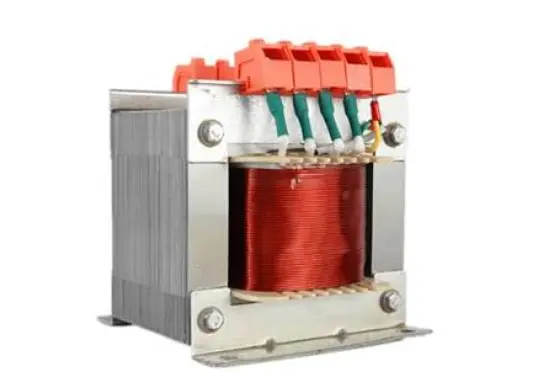
For buyers and engineers selecting a 480v single phase transformer, the key question is not only the voltage rating. It is also how the transformer will be connected, what equipment it will serve, and whether the secondary system requires a grounded conductor.
What Is a Neutral in a Transformer System?
A neutral is a conductor connected to the neutral point of a transformer winding. In many AC systems, this neutral point is grounded and used as a return path for unbalanced current in line-to-neutral loads.
A neutral is not the same as an equipment grounding conductor. The neutral is normally a current-carrying conductor when line-to-neutral loads are connected. The equipment grounding conductor is a safety conductor intended to provide a low-impedance fault path and help protective devices operate during a fault.
Confusing neutral and ground can create serious safety risks. A transformer installation should always be designed and inspected by qualified electrical personnel according to applicable codes and local requirements.
When a 480V Transformer Does Not Need a Neutral
A 480V transformer usually does not need a neutral when it supplies only 480V line-to-line loads.
Common examples include:
- Three-phase motors
- Industrial machinery
- Pumps and compressors
- HVAC equipment
- Welding equipment
- Certain production lines
- 480V control panels designed for line-to-line input
In a three-phase 480V delta system, there may be no neutral point available. Loads are connected between phase conductors, and the system can operate without a neutral conductor.
Similarly, a 480v single phase transformer may be connected across two phase conductors to provide a 480V single-phase supply. If the load only requires two wires at 480V, a neutral may not be needed. However, grounding and overcurrent protection remain essential parts of a safe installation.

When a 480V Transformer Does Need a Neutral
A neutral may be required when the transformer secondary is designed to provide both line-to-line and line-to-neutral voltages.
A common example is a 480Y/277V system. In this configuration, the line-to-line voltage is 480V, while the line-to-neutral voltage is 277V. The neutral point of the wye secondary allows 277V loads to be connected from phase to neutral.
A neutral may be needed for:
- 277V lighting circuits
- Line-to-neutral control circuits
- Mixed-voltage distribution panels
- Certain building electrical systems
- Equipment requiring a grounded conductor
- Systems with single-phase loads connected from phase to neutral
If these loads are present, the transformer and distribution system must include a properly sized and identified neutral conductor.
480V Delta vs. 480Y/277V Wye
The transformer winding configuration is one of the most important factors.
480V Delta
A 480V delta transformer secondary has three phase conductors connected in a triangular winding arrangement. Standard delta systems do not provide a neutral unless a special grounding or center-tapped arrangement is used.
Delta systems are common in industrial power distribution where the main loads are motors and heavy equipment.
480Y/277V Wye
A 480Y/277V wye transformer secondary has three phase conductors and a neutral point. The voltage between any two phase conductors is 480V. The voltage from any phase conductor to neutral is 277V.
This configuration is common in commercial and industrial buildings because it can serve both 480V equipment and 277V lighting or control loads.
A 480v single phase transformer can be designed for different purposes. Some units have a 480V primary and a lower-voltage secondary, such as 240V, 208V, 120V, or 24V. Others may have a 480V secondary for single-phase equipment.
Whether it needs a neutral depends on the secondary winding design.
For example:
- A 480V two-wire secondary may not need a neutral.
- A 120/240V center-tapped secondary includes a neutral.
- A control transformer may have one side grounded depending on the system design.
- An isolation transformer may have a separately derived secondary that must be grounded according to applicable rules.
When selecting a transformer, buyers should review the nameplate, wiring diagram, terminal markings, and manufacturer documentation carefully.
Neutral, Grounding, and Bonding Are Different
A major source of confusion is the difference between neutral, grounding, and bonding.
The neutral is used for normal current return in certain circuit arrangements. Grounding connects a system or equipment to earth or a grounding electrode system. Bonding connects conductive parts together so that fault current has a reliable path.
A 480V transformer may not need a neutral for normal operation, but it still needs proper grounding and bonding. Transformer enclosures, raceways, panels, and connected equipment must be bonded and grounded according to the installation requirements.
This distinction matters because using the grounding conductor as a neutral is unsafe and generally not permitted in normal wiring systems.
Questions to Ask Before Choosing a 480V Transformer
Before purchasing or installing a transformer, clarify these points:
- Is the system single-phase or three-phase?
- Is the transformer primary voltage 480V?
- What secondary voltage is required?
- Are the loads line-to-line or line-to-neutral?
- Is a 277V circuit required?
- Does the equipment require a neutral conductor?
- Is the transformer delta, wye, or center-tapped?
- Is the transformer a separately derived system?
- What grounding method is required?
- What local electrical code applies?
For a 480v single phase transformer, it is especially important to confirm the required input and output wiring. A transformer may have the correct voltage rating but the wrong winding arrangement for the intended application.
Common Mistakes to Avoid
One common mistake is assuming that every 480V system has a neutral. Many 480V industrial systems are three-wire systems with no neutral conductor.
Another mistake is assuming that ground can replace neutral. It cannot. The equipment grounding conductor should not be used as a normal current-carrying conductor.
A third mistake is selecting a transformer based only on voltage and kVA rating. Winding configuration, insulation class, enclosure type, temperature rise, frequency, phase, and terminal arrangement can all affect whether the transformer is suitable.
Conclusion
A 480V transformer does not automatically need a neutral. If the transformer supplies only 480V line-to-line loads, a neutral may not be required. If the system supplies line-to-neutral loads, such as 277V lighting or certain control circuits, then a neutral is typically needed.
The safest way to answer the question is to look at the transformer winding configuration and the connected load requirements. Delta systems often operate without a neutral, while 480Y/277V wye systems include a neutral point. A 480v single phase transformer may or may not require a neutral depending on its secondary design and application.
For transformer product information, visit JS Ningyi.