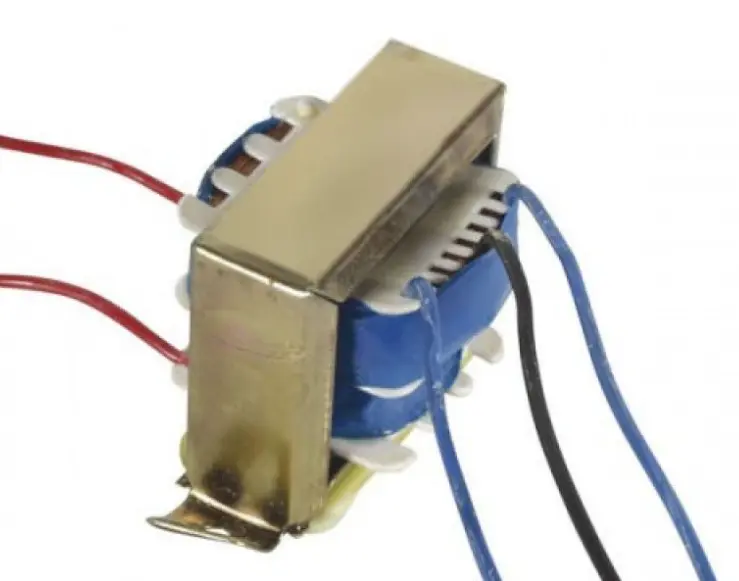
A step-down transformer is designed to reduce high voltage to a lower, safer, and more usable voltage level. Its main purpose is to make electrical power suitable for homes, factories, commercial equipment, lighting systems, control panels, chargers, and many low-voltage devices.
In simple terms, a step-down transformer takes electricity from a higher-voltage source and converts it into a lower-voltage output while maintaining stable power transfer. This makes it one of the most important components in modern electrical systems.
Electricity is often transmitted at high voltage because it reduces energy loss over long distances. However, high voltage is not suitable for most end-use equipment. Before power can be safely used by machines, appliances, lighting systems, or electronic devices, it must be reduced to the correct voltage level.
That is where a step-down transformer becomes essential.
It helps:
- Reduce voltage for safe equipment operation
- Match power supply levels with device requirements
- Improve electrical system reliability
- Support low-voltage control and lighting systems
- Protect equipment from unsuitable voltage input
Without step-down transformers, many electrical devices would be exposed to voltage levels they cannot safely handle.

How Does a Step-Down Transformer Work?
A step-down transformer works through electromagnetic induction. It usually has two main windings: a primary winding and a secondary winding.
The primary winding receives the higher input voltage. The secondary winding delivers the lower output voltage. Because the secondary winding has fewer turns than the primary winding, the output voltage becomes lower than the input voltage.
For example, a transformer may reduce 220V or 110V power to 24V, 12V, or another required low-voltage level depending on the application.
Common Uses of Step-Down Transformers
Step-down transformers are widely used across residential, commercial, and industrial environments. Common applications include:
- LED lighting systems
- Doorbells and security systems
- Battery chargers
- Industrial control panels
- HVAC control circuits
- Low-voltage power supplies
- Audio and electronic equipment
- Machinery control systems
- Automation equipment
In many of these applications, stable low-voltage power is necessary for both safety and performance.
What is a 12v Step Down Transformer Used For?
A 12v step down transformer is used when electrical equipment requires a 12-volt output from a higher-voltage power source. It is commonly used in LED lighting, control circuits, security devices, small appliances, charging systems, and other low-voltage electrical applications.
For example, if a lighting system requires 12V but the available power source is 110V or 220V, a 12v step down transformer helps convert the input voltage to the correct output level.
This type of transformer is especially important when devices are sensitive to voltage variation or when low-voltage operation is required for safer installation.
Key Benefits of Using a Step-Down Transformer
A step-down transformer provides several practical benefits:
1. Safer Voltage Output
Lower voltage reduces electrical risk and makes many systems safer to operate.
2. Equipment Compatibility
It allows high-voltage supply lines to power low-voltage devices correctly.
3. Stable Power Conversion
A quality transformer helps maintain consistent output voltage under proper load conditions.
4. Longer Equipment Life
Using the correct voltage helps reduce overheating, damage, and premature failure.
5. Flexible Applications
Step-down transformers can be designed for different voltages, capacities, installation types, and operating environments.
How to Choose the Right Step-Down Transformer
When selecting a step-down transformer, several factors should be considered:
- Input voltage
- Required output voltage
- Power rating or capacity
- Frequency compatibility
- Load type
- Installation environment
- Safety certifications
- Heat dissipation
- Long-term reliability
For a 12V application, choosing the correct 12v step down transformer depends on the power demand of the connected equipment. The transformer should be rated above the actual operating load to ensure stable performance and safe operation.
Step-Down Transformer vs. Power Adapter
Although both can reduce voltage, a step-down transformer and a power adapter are not always the same.
A traditional step-down transformer reduces AC voltage through windings. A power adapter may include rectification, filtering, and voltage regulation to convert AC to DC. For electronic devices, the correct output type, AC or DC, must be confirmed before selection.
This is especially important for LED lighting, chargers, control boards, and electronic systems.
Conclusion
The purpose of a step-down transformer is to reduce high voltage to a lower, safer, and more practical voltage for electrical equipment. Whether used in industrial systems, lighting, control panels, or low-voltage devices, it plays a critical role in power conversion and equipment protection.
For applications that require 12V output, a properly selected 12v step down transformer can help ensure stable operation, safer installation, and better long-term reliability.
To discuss transformer requirements or product solutions, contact us here: https://www.jsningy.cn/contact-us/
FAQ
What does a step-down transformer do?
It reduces high voltage to a lower voltage suitable for equipment, appliances, lighting, or control systems.
Why is a step-down transformer necessary?
It makes electrical power safer and compatible with devices that cannot operate directly on high-voltage supply.
Where is a 12v step down transformer commonly used?
It is commonly used in LED lighting, security systems, low-voltage controls, small appliances, and electronic equipment.
Can a step-down transformer improve equipment safety?
Yes. By supplying the correct voltage, it helps reduce the risk of overheating, malfunction, and electrical damage.
How do I choose the correct step-down transformer?
Check the input voltage, output voltage, power rating, load type, installation environment, and safety requirements before selection.