A traditional transformer cannot work directly on steady DC voltage. Transformers depend on a changing magnetic field to transfer energy from one winding to another. Alternating current naturally creates that changing magnetic field. Direct current, when constant, does not.
This is why a standard power transformer connected to DC will not step voltage up or down in the normal way. Instead, the winding may behave almost like a short circuit after the brief switching moment. The result can be overheating, insulation stress, blown fuses, damaged windings, or equipment failure.
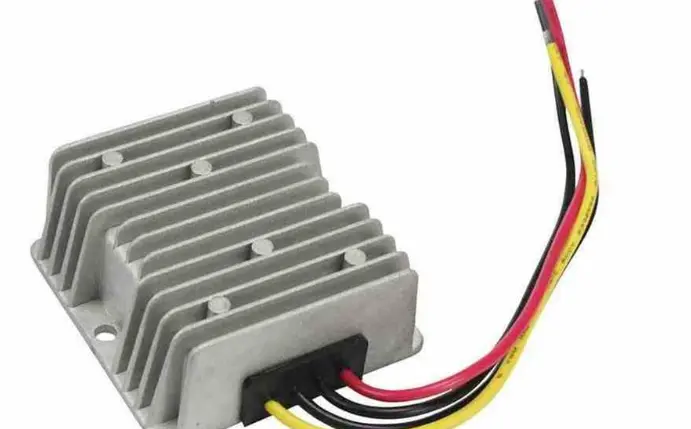
Still, many buyers search for a dc voltage transformer because they need to convert one DC voltage to another. In most cases, the correct device is not a traditional transformer alone. It is a DC-DC converter, switching power supply, inverter-based system, or electronic converter that uses high-frequency switching to make voltage conversion possible.
Why Transformers Need Changing Current
A transformer has a primary winding, secondary winding, and magnetic core. When AC flows through the primary winding, the current rises and falls continuously. This creates a changing magnetic flux in the core. That changing flux induces voltage in the secondary winding.
Without change, there is no continuous induction.
That is the key point. A transformer does not transfer power simply because voltage is present. It transfers power because the magnetic field is changing. Standard AC supply creates this condition automatically.
DC does not. A battery, for example, provides steady voltage in one direction. Once connected, the current may briefly change at the instant of switching, but after that the magnetic field becomes steady.

What Happens If DC Is Applied to a Transformer?
If steady DC is applied to a normal transformer winding, several problems may occur.
First, the transformer core can saturate. Core saturation means the magnetic material can no longer respond normally to additional magnetizing force.
Second, the winding current may become very high because the winding’s resistance is usually low. In AC operation, inductive reactance limits current. With DC, that reactance does not behave the same way after the initial transient.
Third, heat builds up quickly. Excess current can damage winding insulation, deform internal parts, or burn the transformer.
This is why connecting a normal AC transformer directly to DC is unsafe and should not be done.
Why People Say DC Transformers Exist
The phrase dc voltage transformer is common in product searches, but it is usually shorthand. In real engineering language, the product may be one of the following:
- DC-DC converter
- Switching power supply
- Isolated DC converter
- Buck converter
- Boost converter
- Buck-boost converter
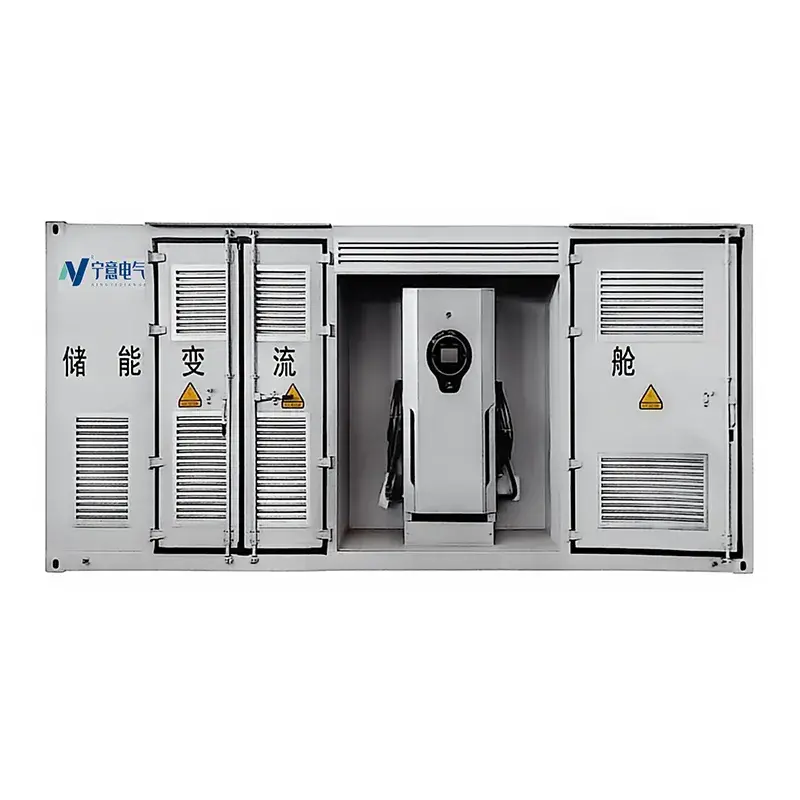
- Inverter and transformer system
- High-frequency power module
These devices can convert DC voltage, but they do it electronically. They first switch the DC on and off rapidly, creating a changing waveform. That changing waveform can then pass through a high-frequency transformer or inductor before being rectified and regulated back into DC.
So the transformer may still be inside the device, but it is not working from steady DC directly.
How DC-DC Conversion Works
A DC-DC converter changes one DC voltage level into another. For example, it may convert 48V DC to 12V DC, 24V DC to 5V DC, or 12V DC to 48V DC.
The process usually involves:
- Switching the DC input at high frequency
- Storing and transferring energy through inductors or transformers
- Rectifying the switched waveform
- Filtering the output
- Regulating voltage through control electronics
This is how modern power electronics make DC voltage conversion practical.
Isolated vs Non-Isolated DC Conversion
Not all DC converters are the same.
A non-isolated converter changes voltage without electrical separation between input and output. Buck and boost converters are common examples.
An isolated converter uses a high-frequency transformer inside the circuit. This provides electrical separation between input and output, which may improve safety, reduce noise paths, or meet system design requirements.
When buyers ask for a dc voltage transformer, they often need an isolated DC-DC converter rather than a simple non-isolated module.
Common Applications
DC voltage conversion is used in many industries.
Typical applications include:
- Battery systems
- Solar power equipment
- Electric vehicles
- Telecom power systems
- Industrial controls
- LED lighting
- Railway electronics
- Marine power systems
- Automation cabinets
- UPS systems
- DC microgrids
- Charging equipment
In each case, the correct device depends on voltage range, power rating, isolation requirement, efficiency, cooling, protection, and installation environment.
AC Transformer vs DC-DC Converter
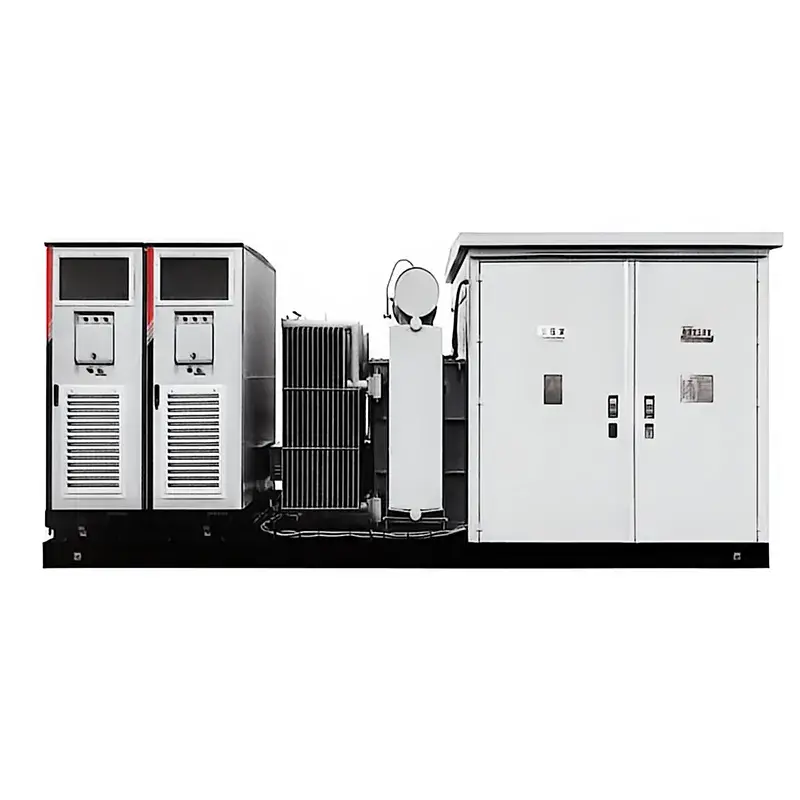
An AC transformer is simple, rugged, and effective for AC voltage conversion. It is used in distribution systems, control circuits, industrial machines, and power supplies.
A DC-DC converter is an electronic device for DC voltage conversion. It may contain a transformer internally, but it also includes switching components, control circuits, rectifiers, and filters.
The difference matters during purchasing. If the input is AC, a transformer may be correct. If the input is DC, a DC-DC converter or switching power system is usually required.
What Buyers Should Check
Before selecting equipment, confirm these details:
- Is the input AC or DC?
- What is the input voltage range?
- What output voltage is required?
- How much power or current is needed?
- Is electrical isolation required?
- What efficiency is expected?
- What temperature range applies?
- Is the load continuous or intermittent?
- What protection is needed?
- Is the environment indoor, outdoor, humid, dusty, or hot?
- What mounting style is required?
- What standards or certifications apply?
These questions help avoid buying a transformer when the system actually needs a converter.
Common Mistakes to Avoid
One common mistake is assuming any voltage device can work with AC or DC. It cannot. Input type must match the product rating.
Another mistake is using the term transformer for every power supply. This can lead to incorrect product selection.
A third mistake is ignoring isolation. Some DC systems require isolated output for safety or noise control, while others can use non-isolated conversion.
Finally, buyers should avoid connecting DC directly to an AC transformer for testing. This can damage the transformer quickly.
Conclusion
Traditional transformers cannot work directly on steady DC voltage because they require a changing magnetic field. AC naturally provides that changing field, while constant DC does not. Applying DC to a standard transformer can cause core saturation, excessive current, overheating, and damage.
When people search for a dc voltage transformer, they usually need a DC-DC converter, switching power supply, or isolated power module. The right choice depends on input voltage, output voltage, power rating, isolation, efficiency, and operating environment.
For transformer and voltage conversion product information, visit JS Ningyi.